Doom runs on an X9S children’s camera after a software rebuild
Andrew Spode has made Doom playable on an X9S children’s camera, using its own buttons and sound output. He changed how the game uses the camera’s limited memory and published the supporting tools. The method has been tested on one specific camera and firmware version.
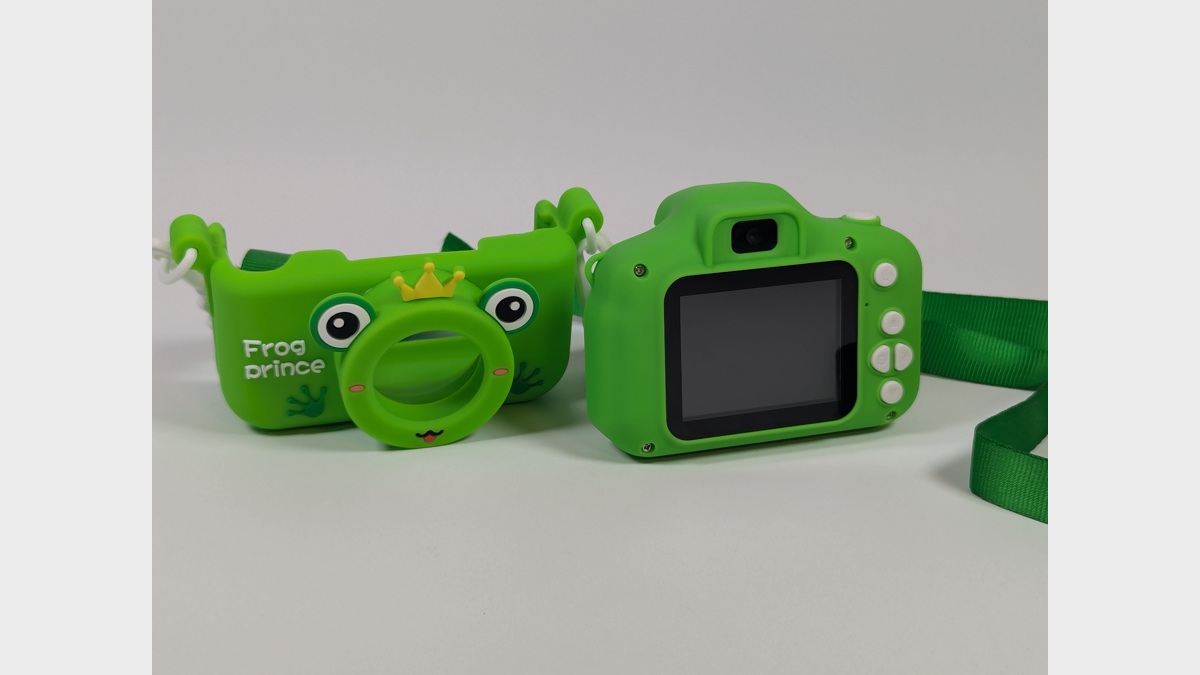
Front and rear views of a green X9S camera with a frog-shaped case.
View full-size imageFrom toy camera to playable game
Andrew Spode’s 1 November account describes how he investigated a cheap X9S children’s camera and made it run Doom. The camera uses an HX3302B chip, the component that executes the program’s instructions.
His demonstration includes camera-button controls, sound and music. Beyond the game itself, the published tools and documentation provide a starting point for understanding this camera’s software and writing other programs for it.
Making room for the game
RAM is the temporary workspace a program uses while running. Flash stores code even when the device is switched off. The camera did not have enough free workspace to run the game in the usual way.
Spode put frequently executed game code in RAM and left rarely used sections in Flash. This avoided filling the limited workspace with the entire program. A builder investigating a memory shortage could study the approach as a practical example.
A similar camera may not be compatible
The project was tested on one camera running firmware version 3030B-20A1-20A1 V1.1. Matching appearances or an X9S label do not establish identical hardware and software; installing an unsuitable update can stop the camera working.
The repository supplies tools and documentation, but does not distribute the camera’s original firmware or the game data.