Sylphide OS puts windows and menus on tiny computers
Sylphide OS runs a desktop with windows and menus on several types of very small computer. A maker could use it to explore an interface for a custom device. The current version does not yet provide file storage or networking.
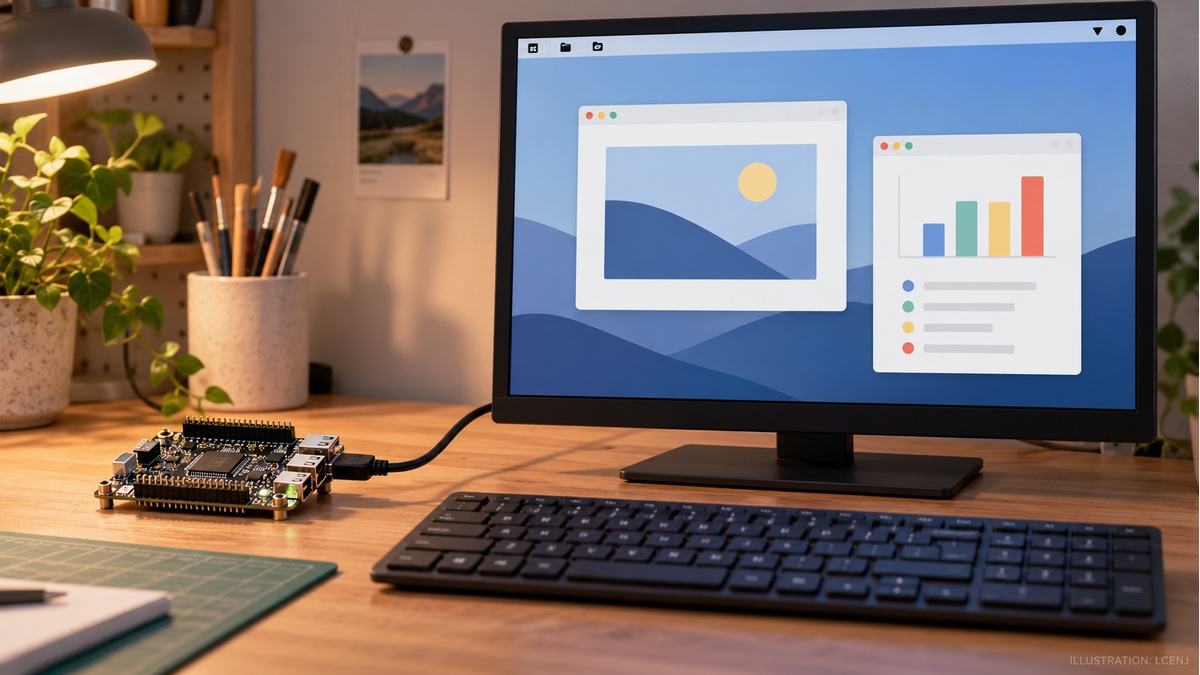
A small electronics assembly beside a keyboard and a monitor displaying two simple windows.
View full-size imageWhat has been built?
Thomas Capricelli has developed a graphical environment for several microcontrollers: small computers integrated into individual chips that execute program instructions. Rather than running Windows or Linux, the project provides its own simple desktop. Version 0.1 includes windows, menus and a device-information panel.
How does it coordinate the device?
An operating system manages work and access to a device’s resources. Sylphide OS uses FreeRTOS to help schedule tasks, then adds its display and input layers. The project offers a concrete way to explore how program execution, user input and an on-screen interface fit together.
What is still unfinished?
File storage, networking and loading separate programs from a memory card remain planned features. The Olimex ESP32-P4-PC target currently accepts a keyboard or a mouse, but not both together. USB input on the Pico 2 target is also unfinished. A working desktop display therefore does not make this a complete personal computer.