Olimex’s Ethernet add-on gives small devices a wired network connection
Olimex’s UEXT-CH390 adds a cable-network connection to supported devices that lack one. A temperature-monitoring project could use it to send readings across a home network without relying on Wi-Fi. The module is on preorder, with expected availability listed as 9 November.
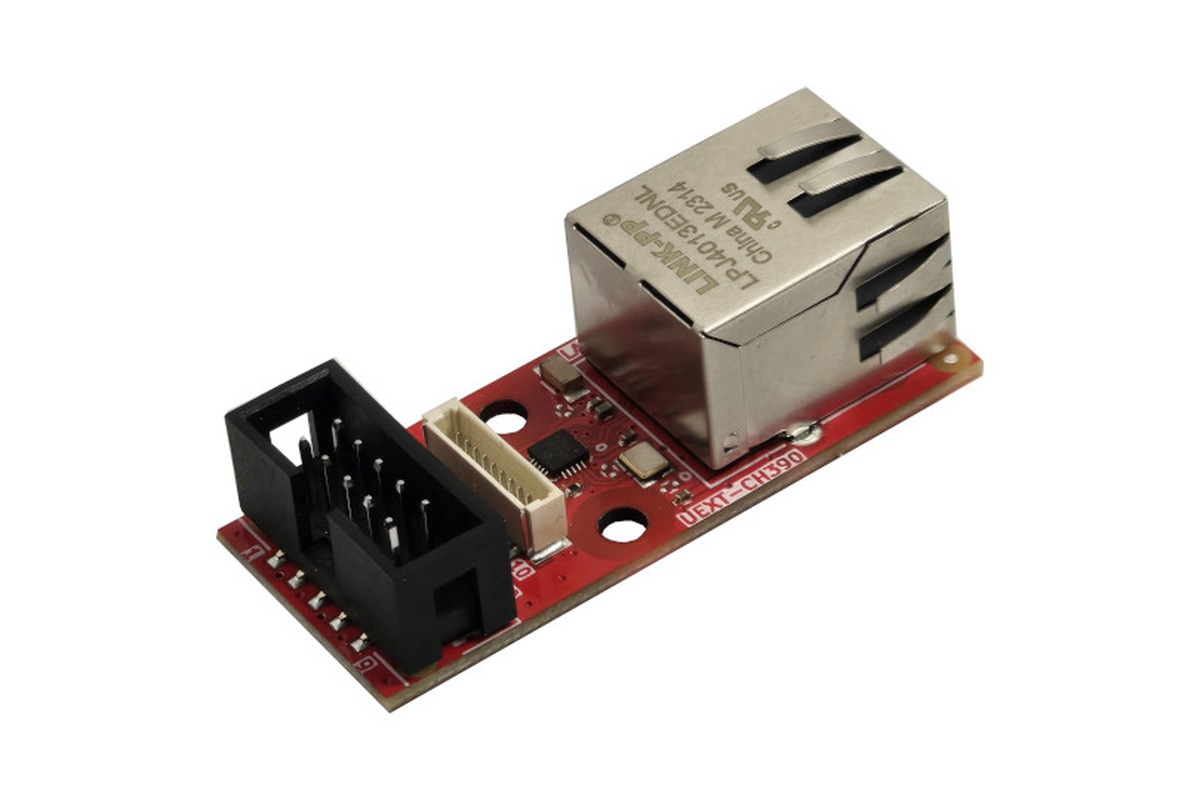
The red UEXT-CH390 module with its metal Ethernet socket and two host-side connectors.
View full-size imageA cable connection for a small controller
Many small devices have a controller that runs their program but no Ethernet socket. The UEXT-CH390 is an add-on circuit board that supplies this connection for compatible Pico and ESP32 models. An Ethernet cable plugs into one side; a data interface called SPI connects the module to the controller.
The add-on is not a complete device or an internet service. It still needs power, suitable software and a connection to a router or other network equipment. A local network can work without internet access—for example, a computer in the same home could open the device’s control page.
What Olimex has demonstrated
Olimex documents an ESPHome example for its RP2040-PICO30U-16 board. ESPHome is software for building connected home devices. The creator records hardware testing on 2 October, including light control and button-state readings through a local page and Home Assistant. That test predates the new coverage on 6 November.
The supplied program is not automatically suitable for every board. The module requires 3.3 V, and the ready-made example assumes a trusted local network. A 10/100 Mbps Ethernet link also does not guarantee 100 Mbps application throughput: software and the controller interface affect the result.
Preorder rather than confirmed immediate stock
The product page listed expected availability on 9 November 2026 when reviewed. Design files, software and documentation are public, but delivery and compatibility for a particular build still need checking with the manufacturer.