Tiny bubbles use electricity and sound to steer liquid
Cornell researchers have used electricity to create tiny bubbles, then sound to make them vibrate and steer liquid. The experiment could help build small tools that handle very little fluid. Mixing droplets in a laboratory is a possible application; medical use has not been established.
How does it work?
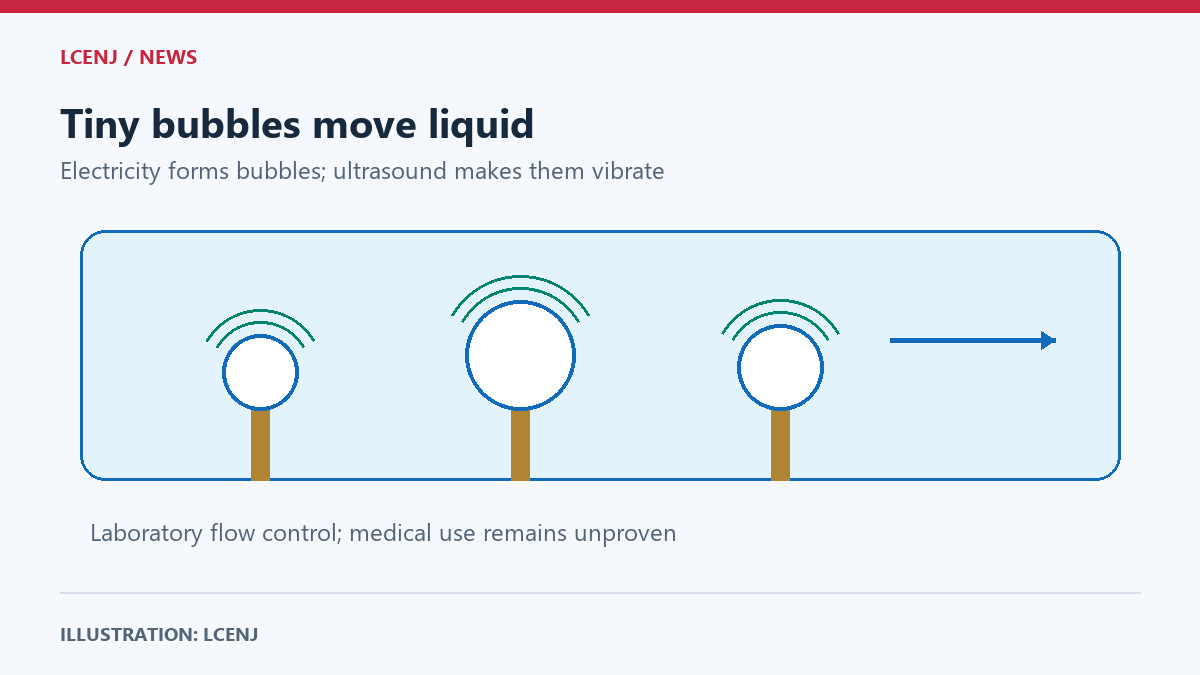
The university’s 14 October report describes bubbles formed on electrically conducting points. Ultrasound—sound above human hearing—makes them vibrate, moving the surrounding liquid.
What was demonstrated?
Changing the bubble arrangement changed the flow direction in the experiment. This is not a working medical robot; adding the necessary circuits to robots remains a future research step.