ST’s new toolkit helps AI assistants write software for STM32 devices
ST has introduced the beta STM32Cube for Agentic AI toolkit, giving coding assistants access to its technical references and validated examples. When preparing a temperature logger, for example, an assistant can look up how the selected hardware should be used. An engineer must still review the program and test it on the device.
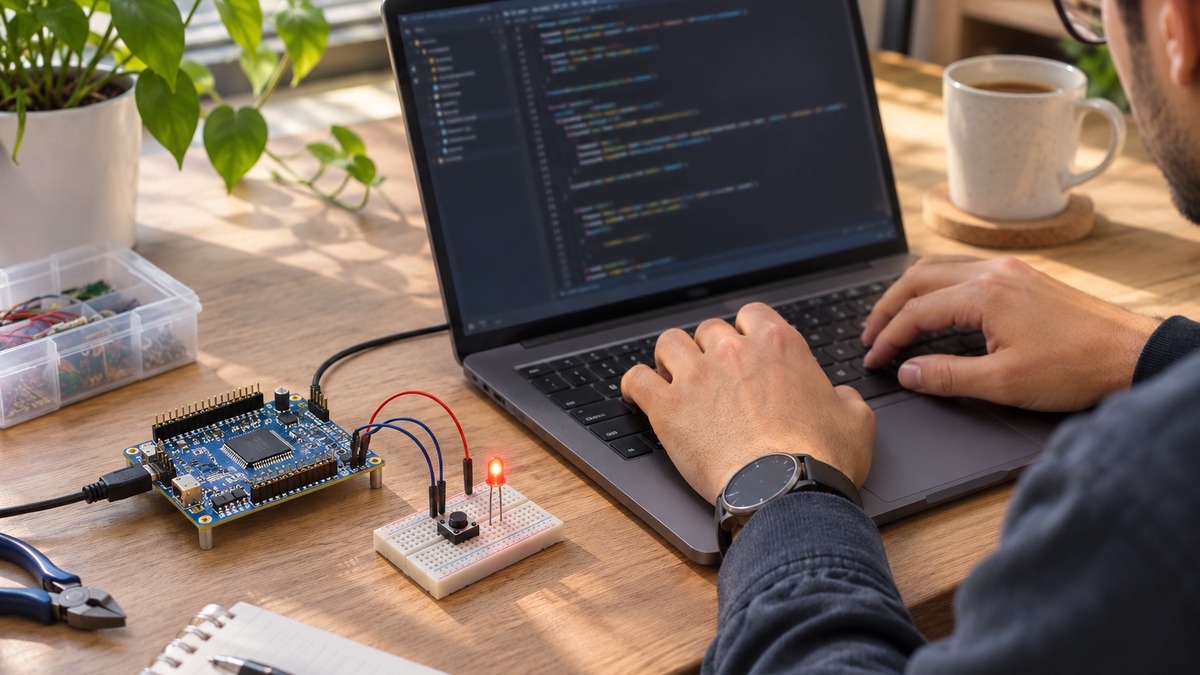
Code review on a laptop beside a controller board and a button-and-light prototype; conceptual illustration.
View full-size imageWriting software for STM32 hardware
Many devices use a small component to run control instructions, such as reading a temperature, lighting an indicator or responding to a button. STM32 is a family of these components. Writing their software requires knowing the capabilities and limits of the chosen part.
ST announced STM32Cube for Agentic AI on 4 November to make that information available to AI coding assistants. It connects an assistant to manufacturer documentation, reference programs and tools for building and checking software.
Why the references matter
Without the right documentation, an assistant can suggest an instruction that does not suit the selected device. This toolkit helps ground its answer in STM32 information—for example, when looking up temperature-reading functions or configuring a button input.
The official guide proposes an exercise that logs the chip’s internal temperature. That value should not automatically be treated as room temperature: it measures the component itself.
Assistance still needs verification
The toolkit is in beta, an experimental release that may change. ST reports improved coding results, but that does not establish that every generated program is correct. Engineers still need to review settings, device limits and behavior on the actual hardware.