An open electronic ruler measures how far a part has moved
A maker has shared a device design that measures movement without contact between its two measuring surfaces. One possible use is showing how far a moving part of a workshop machine has risen. The project is still being developed, and its starting reference must be set each time it powers up.
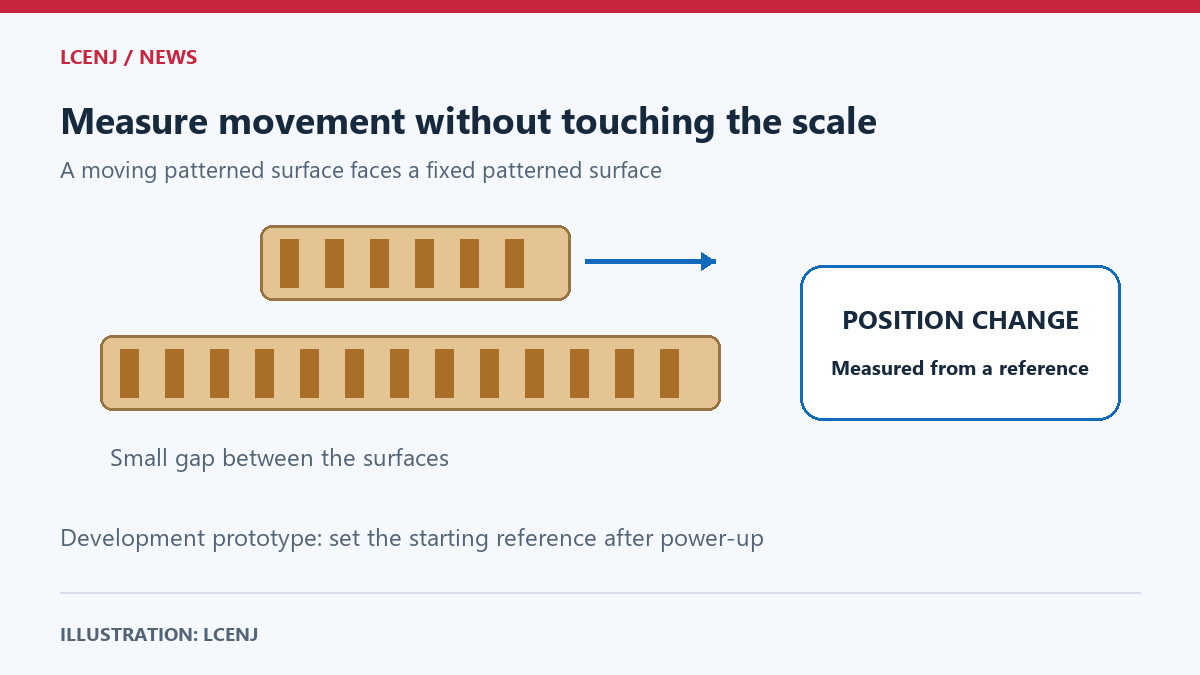
How does it detect movement?
Two surfaces with copper patterns face each other across a small gap. One moves while the other stays fixed. Their changing alignment changes the electrical interaction between them, which the device program uses to calculate movement. A measuring device like this is a sensor; this kind of position sensor is called an encoder.
What has been shared?
The public project page was created on 18 October, followed by a Hackaday report on 22 October. The maker, Nick, has shared component designs, device software and personal test data. Work on the project began before this public introduction.
What are its limits?
This version counts movement from a starting reference, so that reference must be established after power-up. Liquid between the surfaces and temperature-related changes in their dimensions can affect measurements. The published data describe the maker’s tests, not a guarantee that every build will perform identically.