Practise in a virtual warehouse: Google outlines a robot training workflow
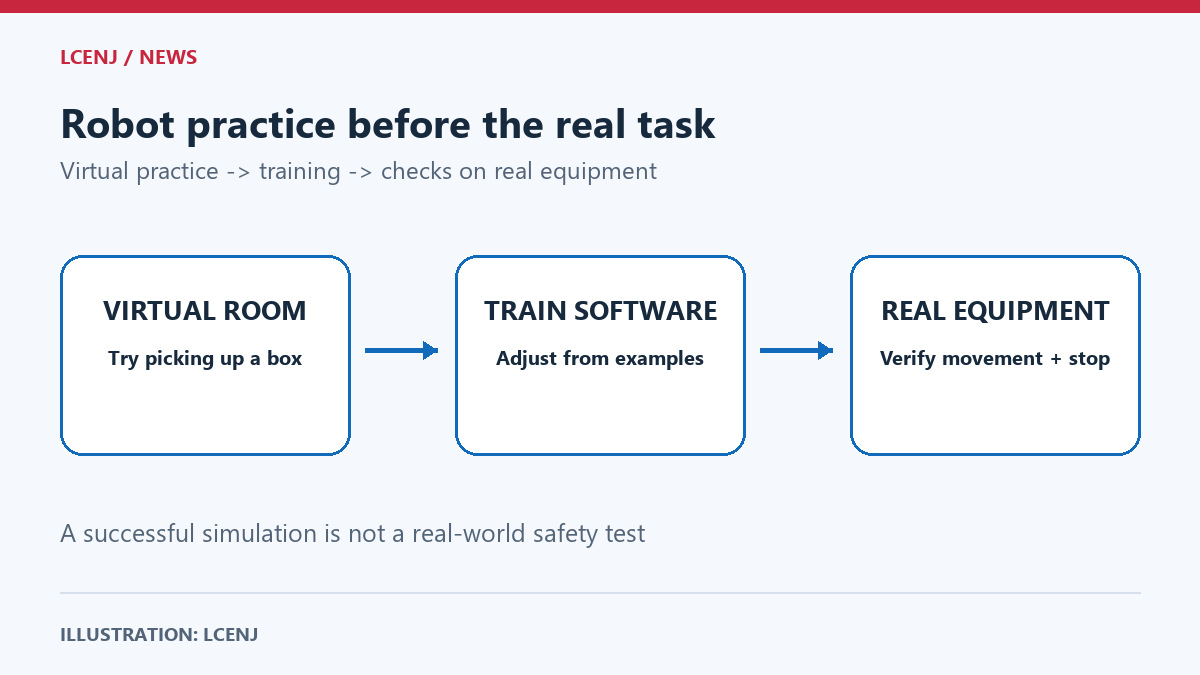
Google has outlined a workflow for practising robot tasks in a computer-made environment, training the control software and using it on real equipment. The aim is to move some trial and error ahead of physical movement. Picking up a box in a virtual warehouse is one example; success there does not guarantee success in a real warehouse.
What does virtual practice mean?
A simulator is a program that approximates a robot and its surroundings on a computer, rather like practising driving before entering traffic. Training an AI system means adjusting its behaviour using examples or the results of its attempts.
What is the announcement?
On 20 October, Google described how its cloud services connect simulation, training and robot operation. This is a workflow announcement, not the invention of robot simulation or evidence that any robot is ready for work.
Why check the real machine?
In the warehouse example, a box’s surface friction or camera lighting can differ from the simulation. Builders still need to check movement and stopping on real equipment. This is an educational example; no independent robot test or speed measurement is reported here.